
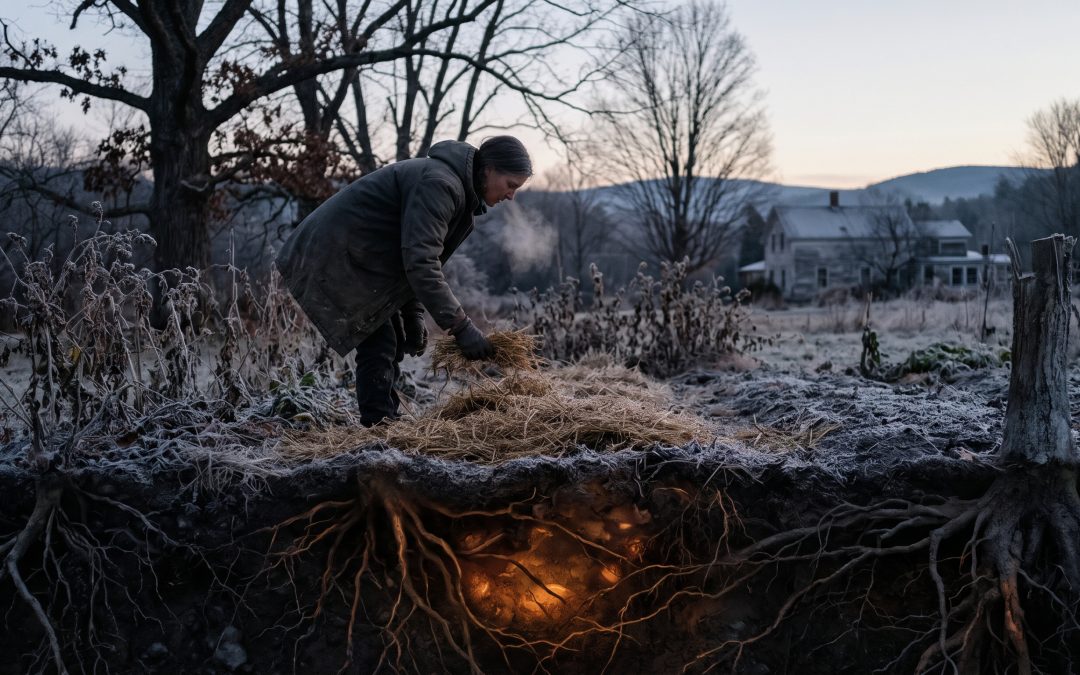
The mornings in the northern Berkshires have dipped into the upper twenties. Frost now coats the remaining grass, and the vibrant, fiery canopy of autumn has dropped, leaving bare branches silhouetted against the pale sky. Over the last few days, I have been out in the cold, putting my garden to bed for the winter.
There is a quiet, specific satisfaction in this work. You are no longer coaxing seeds to sprout or vines to climb. You are clearing away the spent stalks, turning the cold earth, and laying down the mulch. You are preparing the ground not for growth, but for rest. You are doing the physical work of acknowledging that the season of outward expansion is over.
Yet, as a culture, we struggle deeply with this transition.
Modern life expects us to maintain a perpetual, high-energy summer all year long. We flip on the artificial lights to push back the early dark. We drink more coffee to fight the natural sluggishness of the cold. We demand of ourselves the same relentless productivity in the freezing, dark days of November and December as we do in the long, bright days of June. We treat winter as an inconvenience to be powered through, rather than a necessary season of restoration.
In Daoist practice and Chinese medicine, winter is the season of deep Yin. It is associated with the Water element, the kidneys, and the profound quiet of the dormant earth. Right now, the sap in the trees is leaving the branches and retreating down into the trunk. The life force is sinking below the frost line to be stored safely in the root system. If the energy didn’t retreat, the tree would freeze and shatter. The withdrawal is what ensures its survival.
On Tuesdays each week I spend time with an eighty-six-year-old dear friend who dreads this time of year. He is a self-professed curmudgeon who takes a certain pleasure in being a grouch, and he often complains to me that January and February are the longest, most miserable stretches of the calendar.
When I sit with him, I don’t try to force him to cheerfully embrace the cold. Instead, I try to offer him a different kind of comfort. I point out that he doesn’t have to like the frost. He just has to act like the ancient maple trees outside his window. The trees don’t pretend to enjoy the winter months; they just strip away all the exhausting outward effort, hunker down, and stubbornly endure. I tell him he has earned the right to be a dormant, cranky root system for a few months. His only job right now is to simply rest in the dirt until the sun comes back.
We are no different. This time of year is not meant for pushing outward, launching new exhausting endeavors, or forcing ourselves into a state of constant Yang exertion. It is a time for gathering inward. It is a time for warmer foods, earlier bedtimes, and quiet contemplation.
When you sit in your stillness practice these days, you do not need to reach outward. Let your awareness drop. Let your breath sink down into your lower abdomen, down into your own root system.
As the frost settles in and the nights grow long, give yourself permission to follow the garden’s lead. You do not have to bloom all year. Let the leaves fall. Pull your energy inward, store it safely in the deep well of your being, and allow yourself the simple, radical grace of resting in the dark.